Showing posts with label God is great. Show all posts

"I cannot control such a God."

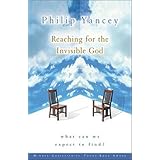
From Chapter 9 of Reaching for the Invisible God by Philip Yancey.

Product DetailsI have learned one absolute principle in calculating God's presence or absence, and that is that I cannot. God, invisible, sovereign, who according to the psalmist "does whatever pleases him," sets the terms of the relationship. As the theologian Karl Barth insisted so fiercely, God is free: free to reveal himself or conceal himself, to intervene or not intervene, to work within nature or outside it, to rule over the world or even to be despised and rejected by the world, to display himself or limit himself. Our own human freedom derives from a God who cherishes freedom.

I cannot control such a God. At best I can put myself in the proper frame to meet him. I can confess sin, remove hindrances, purify my life, wait expectantly, and - perhaps hardest of all - seek solitude and silence. I offer no guaranteed method to obtain God's presence, for God alone governs that. Solitude and silence merely supply the state most conducive to attending to the still, small voice of God. There is, however, a sure way to promote God's absence. C. S. Lewis sets it out clearly: "Avoid silence, avoid solitude, avoid any train of thought that leads off the beaten track. Concentrate on money, sex, status, health, and (above all) on your own grievances. Keep the radio on. Live in a crowd. Use plenty of sedation. If you must read books, select them carefully. But you'd be safer to stick to the papers. You'll find the advertisements helpful; especially those with a sexy or a snobbish appeal."

Lewis adds that he cannot give advice on pursuing God, having never had that experience. "It was the other way round; He was the hunter (or so it seemed to me) and I was the deer ... But it is significant that this long-evaded encounter happened at a time when I was making a serious effort to obey my conscience."

God Is Great. God Is Good.

Usually part of a childhood table grace, these six words make up one of the most theologically astute prayers a person can utter.

That is, when it is understood.

At first glance, it could be the most theologically problematic. Most of God's perfections, especially His greatness and goodness, seem to be irreconcilable with life's often harsh realities. If God is great then He becomes some kind of monster if he allows human suffering that he could stop. That kind of God is definitely not good. But neither is he very great if in His goodness He would stop or remove the pain yet is powerless to do so.

We have cancer in our family; we have know it for about a week now. We don't know the future because God has not shown it yet - doctors do not have enough data to give us a prognosis or even set out the treatment options. Nevertheless, we are strong. This means that right now the prayer's significance comes precisely at those two points: His goodness and His greatness as they relate to the perennial so-called "problem of pain."

We are realistic. Both of us have run the emotional gamut. We do not accept simplistic answers to big questions and there is nothing cavalier in our attitudes. We know very well what we are up against.

But, neither have we even come close to asking, "Why me?" "How could God allow such a thing?" We ask none of these questions because we know the answer and we are completely satisfied with it's logic and fairness.

What we DO find ourselves wondering is, "Why not us?" "Why not this?" We might even ask, "Why has there not been even more of this?"

The writer, Terry Johnson, points out that we tend to approach the question of pain and suffering from the wrong direction. We get off on the wrong foot by beginning with a presumption of human innocence instead of human guilt. We might ask for example, "Why would God allow this to happen to such a fine person who deserves so much better?"

In Genesis God promised death to Adam and his progeny. Final death is postponed but in the meantime, life consists of multiple mini-judgments; "mini" because they fall short of eternal death in hell. The fact is that every minute that we spend this side of hell is a problem.

In reality, the problem is not one of pain but one of pleasure. Why are we permitted to enjoy as much pleasure as we do and to escape as much pain as we do? Strict justice demands hell. Anything less than that - injury, poverty, hunger, heartbreak, or cancer - is mercy; "stays of execution," as it were.

While we rejoice in our deliverance from hell's final punishment, the residuals of the death that entered the world through one man's sin, frequently remind of both a great deliverance to come and of the glorified bodies that await us in a future eternal state.

For our family then, the bottom line is simply this:


God is great. God is good.

Out of His greatness and goodness He has ordained suffering. Terry Johnson: "That suffering has a purpose and knowing this, we will not be shaken. Our sovereign and powerful God is on His throne, we are in His hand, our circumstances are His doing, and He is working them for our good."

Hmmmm . . . sounds a bit like Job, doesn't it?