Correct Thinking About Jesus' Commands Is Not Obedience To Them


Jonathan Parnell writes: In the Introduction to Pastor John Piper's 1979 monograph, Love Your Enemies, he confesses his concern about the hard work of academic reading. He writes:
Every scholarly work on the New Testament is preponderantly an intellectual exercise. The work of thinking which the production of a book like this demands from the author is demanded also from its reader. But because of the nature of the reality with which this work has to do, the necessary preponderance of intellectual work can nevertheless frustrate the goal for which the work is done.
For that reality is and demands far more than thinking. Adolf Schlatter has warned: "Thought can become scholasticism, a mere jangle of words, if the concept replaces the essence, or dogma replaces reality." The reality from which Jesus' command of enemy love springs and the reality at which it aims is not exhausted by correct thinking about the command.
If a book about this command does not ultimately lead beyond mere thinking to an active realization of what the command intends, then that thinking itself, in all its possible technical accuracy, becomes worthless. "Though I understand all mysteries and all knowledge . . . and have not love, I am nothing."
'Love Your Enemies:' Jesus' Love Command in the Synoptic Gospels and the Early Christian Paranesis, a history of the tradition and interpretation of its uses, SNTS, 38, (Cambridge: Cambridge University Press, 1979), 3, paragraphing Mr. Parnell's.
What would you do if you were offered 500 million dollars not to read the Bible for a year?

John Piper gave an 18 minute talk a Lausanne on the importance of the Bible. View and listen here:

"I cannot control such a God."

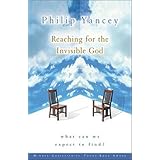
From Chapter 9 of Reaching for the Invisible God by Philip Yancey.

Product DetailsI have learned one absolute principle in calculating God's presence or absence, and that is that I cannot. God, invisible, sovereign, who according to the psalmist "does whatever pleases him," sets the terms of the relationship. As the theologian Karl Barth insisted so fiercely, God is free: free to reveal himself or conceal himself, to intervene or not intervene, to work within nature or outside it, to rule over the world or even to be despised and rejected by the world, to display himself or limit himself. Our own human freedom derives from a God who cherishes freedom.

I cannot control such a God. At best I can put myself in the proper frame to meet him. I can confess sin, remove hindrances, purify my life, wait expectantly, and - perhaps hardest of all - seek solitude and silence. I offer no guaranteed method to obtain God's presence, for God alone governs that. Solitude and silence merely supply the state most conducive to attending to the still, small voice of God. There is, however, a sure way to promote God's absence. C. S. Lewis sets it out clearly: "Avoid silence, avoid solitude, avoid any train of thought that leads off the beaten track. Concentrate on money, sex, status, health, and (above all) on your own grievances. Keep the radio on. Live in a crowd. Use plenty of sedation. If you must read books, select them carefully. But you'd be safer to stick to the papers. You'll find the advertisements helpful; especially those with a sexy or a snobbish appeal."

Lewis adds that he cannot give advice on pursuing God, having never had that experience. "It was the other way round; He was the hunter (or so it seemed to me) and I was the deer ... But it is significant that this long-evaded encounter happened at a time when I was making a serious effort to obey my conscience."

The Influence of Excitement


PermalinkThere are some wonderful instances of ordinary Christians, not least the young, who are concerned to preach the whole gospel unabashedly and do good first to the household of God and then, as much as is possible, outside as well. That has got biblical mandate behind it. . . .
My warning would be to those who are coming along and talking a lot about, “I want to be faithful to the gospel, but I also want to do social justice and good works.” My warning would be: it is not just what you do, it is what you are excited about.
If I have learned anything in 35 or 40 years of teaching, it is that students don’t learn everything I teach them. What they learn is what I am excited about, the kinds of things I emphasize again and again and again and again. That had better be the gospel. 
If the gospel—even when you are orthodox—becomes something which you primarily assume, but what you are excited about is what you are doing in some sort of social reconstruction, you will be teaching the people that you influence that the gospel really isn’t all that important. You won’t be saying that—you won’t even mean that—but that’s what you will be teaching. And then you are only half a generation away from losing the gospel.
Make sure that in your own practice and excitement, what you talk about, what you think about, what you pray over, what you exude confidence over, joy over, what you are enthusiastic about is Jesus, the gospel, the cross. And out of that framework, by all means, let the transformed life flow. (Boldfaced text is my emphasis).
– Don Carson, lecture, “Is the Culture Shaping Us or are We Shaping the Culture?” delivered at the CBMW Different By Design Conference (Feb. 2, 2009, Minneapolis, MN)..

This Is Priceless!

Failure and Success: Not Measuring Up
AW Tozer

Therefore, my beloved brethren, be steadfast, immovable, always abounding in the work of the Lord, knowing that your labor is not in vain in the Lord. --1 Corinthians 15:58

It is good to come to the understanding that while God wants us to be holy and Spirit-filled, He does not expect us to look like Abraham or to play the harp like David or to have the same spiritual insight given to Paul.

All of those former heroes of the faith are dead. You are alive in your generation. A Bible proverb says that it is better to be a living dog than a dead lion. You may wish to be Abraham or Isaac or Jacob, but remember that they have been asleep for long centuries, and you are still around! You can witness for your Lord today. You can still pray. You can still give of your substance to help those in need. You can still encourage the depressed.

I hope you have not missed something good from God's hand because you felt you did not measure up to Gideon or Isaiah. In this your generation, give God all of your attention! Give Him all of your love! Give Him all of your devotion and faithful service! You do not know what holy, happy secret God may want to whisper to your responsive heart.

"Father, I commit myself to faithfulness today. I don't have the great gifts of these 'former heroes of the faith.' But You've given me life today; You've given me the gifts You want me to have and use; You've called me by Your grace to serve You. I give it all to You today. Amen."
 

Jesus, Author of our Faith, 72.

"But to deviate from the truth . . .

. . .  for the sake of some prospect of hope of our own can never be wise, however slight that deviation may be. It is not our judgment of the situation which can show us what is wise, but only the truth of the Word of God. Here alone lies the promise of God's faithfulness and help. It will always be true that the wisest course for the disciple is always to abide solely by the Word of God in all simplicity."
-- Dietrich Bonhoeffer, quoted by Eugene Peterson in
A Long Obedience In the Same Direction, page 36.

Would Jesus Use Facebook? Probably.

With a predictably mixed response to yesterday's blog post I am encouraged with the following from the writings of A. W. Tozer. It reminds me that there are indeed things that matter and then there are things that don't matter at all. What I said yesterday, and maintain today, is that for ME, social networking represents one of the choices to be made in "our painfully intricate civilization". And for ME it is one of those things that "unless [I] get out from under them, they will crush [me] body and soul." After all is said and done, the question, "Would Tozer use Facebook?" or for that matter, "Would Jesus?" might well be answered, "ummmmm . . . probably."

Here's the quotation from Failure and Success: The Things That Matter.

...that you may approve the things that are excellent, that you may be sincere and without offense till the day of Christ, being filled with the fruits of righteousness which are by Jesus Christ, to the glory and praise of God. --Philippians 1:10-11

In life there will be found certain great fundamentals, like pillars bearing up the weight of some mighty building....

The wise man will simplify his life by going to the center of it. He will look well to the foundations and, having done that, he will not worry about the rest.

Life as we know it in our painfully intricate civilization can be deadly unless we learn to distinguish the things that matter from those that do not. It is never the major things that destroy us, but invariably the multitude of trifling things which are mistakenly thought to be of major importance. These are so many that, unless we get out from under them, they will crush us body and soul....

Every believer as well as every minister of Christ must decide whether he will put his emphasis upon the majors or the minors. He must decide whether he will stay by the sober truths which constitute the beating heart of the Scriptures or turn his attention to those marginal doctrines which always bring division and which, at their best, could not help us much on our way to the Celestial City. The Next Chapter After the Last, 11,14.

"Oh God, we are so inundated with distracting things and clamorous voices. Deliver me today from the trifling things and help me to spend every minute of the day on 'the things that matter.' Amen.