Train the Untrained to Reach the Unreached


I have added the following to this blog because it poses a great question. It is a Priority-of-God's-Word question placed in a very strategic Great Commission context. Darren Carlson of Training Leaders International asks:

Why take the time train people to be faithful teachers of Scripture when untold millions are going to hell? 

That is a helpful question for me to wrestle through as I spend a good deal of my time training international pastors and church leaders.
When most people recount the Great Commission, they usually say something to the effect of, “We must go to all the nations and share the gospel.”  To that I say amen!  But then something strange happens — we stop. So what about the command in Matthew 28:20 to teach? It is what David Sills has called the Great Omission.

Reached Can Move Backwards to Unreached

If we are not careful, those precious people groups and nations that we have deemed to be reached will be moved back to unreached. Why? Because in our need for speed, we have not helped to deepen the roots of faith, and instead of trees firmly planted by streams of water, the church is blown over with just the slightest amount of false teaching. The supposed explosion of Christian faith around the world has left us with lots of Christians and very few trained pastors.
When I say “trained,” I do not mean “gone to school.” Theological training is just part of a discipleship process, and for a pastor it means learning to rightly handle the Bible. Many pastors have been trained by sitting in jail cells, but they still don’t know their Bible. Or they know a lot of Bible verses, but have no idea how they fit together. So this particular training that is needed is deliberate theological education that is God-centered, Christ-exalting, and Bible-saturated.
I have met many zealous Christians who are clearly gifted evangelists but who hardly know anything about the Bible. I have heard of pastors who asked my friend, “When was Jesus converted?” I have heard the strangest sermons you can imagine — no where close to anything Christian. I have a good friend from West Africa whose country is no longer on the unreached list, and yet he admits he knows only a handful of churches in the entire nation where the gospel is faithfully preached.

Four Ways to Be Strategically Involved

As someone who is currently giving his life to training pastors internationally, I'm convinced of the strategic role that training plays in reaching the unreached. Here are a few thoughts about how the Western Church can be involved:
  1. As we are deeply concerned in going to the unreached peoples of the earth, we should recognize the unique impact of non-Western missionaries and seek to train them. These untrained messengers of the gospel often know at least five languages — they just need theological grounding. What is the main point of the text? How does the whole Bible fit together? They need to see where they fit in God’s story of redeeming the nations and we should be committed to serving them.
  2. Send unemployed PhD-holders to the international classroom. Our seminaries and graduate schools stock Starbucks and UPS with highly competent minds. Might instead we consider our brothers overseas and ask, "How will they teach faithfully if they are not trained? And how will they be trained without someone teaching? And how are we to teach unless we go?"
  3. Send your pastor overseas twice a year to work with another organization that is providing theological education to international pastors and church leaders. 
  4. Send your pastor overseas for good and free up pastoral positions for seminary graduates. We need men who have been in pastoral ministry to go. Guys in seminary need a place to land. Makes sense to me!
The end goal is to strengthen the existing church internationally with deep truth that will sustain them and equip them to reach the unreached people groups we long to see worship Jesus. 
Darren Carlson is the founder and president of Training Leaders Internationala ministry that mentors and sends graduate students and pastors to bring theological education around the world.
As reported by Churchleaders.com

Results of a new Gallup poll show that only three in ten Americans take the Bible literally as the "actual word of God."

Nearly half of Americans say the Bible is the "inspired" word of God, but it should not be taken literally. About 17 percent say the Bible is simply a book of stories written by men.

In 1980, 40 percent of Americans believed the Bible should be taken literally, with only 27 percent taking it literally in 2001. 
Forty-six percent of those with less than a high-school level education take the Bible literally; only 16 percent of those with postgraduate educations do. (Noted on July 11,2011).

What the “Word of Faith” Movement Is Saying

I believe that the "Word of Faith Movement" is an heretical plague. ReceiveTheWORD has addressed this in the past so I will just add the following from The Kairos Journal of Thursday, June 30, 2011.

Consider the following scenario. What if someone approached you and told you that “words are the most powerful things in the universe” and that the “natural world” could literally be reshaped by the words that you speak? What would you call such a person? To what worldview would he subscribe? You might rightly think that the person is a postmodernist—someone who does not believe that there is an objective reality that is fixed and unyielding. Or, you might conclude that he practices some form of mysterious Eastern religion that considers the world to only be an illusion. But such guesses, as good as they are, would both be wrong.

So just who might this stranger be? The answer in this case is perhaps shocking: he is a Christian pastor from America who probably appears weekly on a national television broadcast, sponsored by a station near you. Adherents to what is known as “word of faith” theology, these pastors or evangelists do not belong to any one denomination or organization. But this loose-knit group is characterized by three common themes in their teaching.

  1. Physical healing. The belief that physical healing from sickness and disease is available at all times to believers takes on a radical new meaning in the hands of the “word of faith” teacher. Citing passages such as Isaiah 53:4-5 (“by His scourging we are healed”) and Matthew 8:16-17 (“He Himself took our infirmities”), preachers such as Kenneth Hagin and Kenneth Copeland suggest that faith always brings about physical healing. Most of them take the position that physical suffering is evidence of a lack of faith and cannot be God’s will for a Christian. A sick person is thus ultimately to blame for his own infirmity.
  2. Promise of Wealth. A related teaching to the first claims that financial prosperity is acquired by following a simple formula. Citing Mark 10:29-30 as their proof text, “faith” teachers say that the Bible promises Christians a return of a hundred times on any amount of money “sown in faith.” Kenneth Copeland tells his followers that “Every man who invests into the gospel has a right to expect the staggering return of one hundredfold.” This principle has become a centerpiece of the television appeals of leading members of the movement including Frederick Price, Paul Crouch, and Benny Hinn, among others.
  3. “Positive Confession.” The third, and perhaps most shocking, tenet of the word of faith teachers is the doctrine of “positive confession”—an idea which really encapsulates the first two mentioned above. Charles Capps, a former farmer who claimed he received the doctrine by direct revelation, popularized this teaching. Capps asserts that a person’s words literally construct the fabric of reality. “The natural world,” he avers, “is to be controlled by man speaking God’s words. . . . [they are] creative power.” As such, any negative language that a person speaks may usher in that reality. They should never say, “I’m not feeling well,” or else sickness and disease will actually come upon them. Capps’ teaching has been widely accepted in word of faith circles, but it has been retranslated into a new and even more popular format through the preaching of Joel Osteen. In his multi-million seller, Your Best Life Now, Osteen adapts positive confession to include the elimination of negative thoughts and words as a way of activating the power of God.
Why have the “word of faith” teachers attracted such large audiences? Obvious answers include the American penchant for greed and selfish lifestyles. But before critics too quickly (even when rightly) judge the movement and its followers for its serious errors, they should engage in a bit of self-analysis. Perhaps one of the reasons so many Christians are looking to aberrant doctrine stems from the fact that they possess the deep sense that the power of God is missing from the churches they have been attending all of their lives. Heresy hunting is not enough. Defenders of orthodoxy must believe in and practice a religion that is supernatural, or else they run the risk of turning the living church of the Lord Jesus Christ into yet another dead institution of the modern world.

Correct Thinking About Jesus' Commands Is Not Obedience To Them


Jonathan Parnell writes: In the Introduction to Pastor John Piper's 1979 monograph, Love Your Enemies, he confesses his concern about the hard work of academic reading. He writes:
Every scholarly work on the New Testament is preponderantly an intellectual exercise. The work of thinking which the production of a book like this demands from the author is demanded also from its reader. But because of the nature of the reality with which this work has to do, the necessary preponderance of intellectual work can nevertheless frustrate the goal for which the work is done.
For that reality is and demands far more than thinking. Adolf Schlatter has warned: "Thought can become scholasticism, a mere jangle of words, if the concept replaces the essence, or dogma replaces reality." The reality from which Jesus' command of enemy love springs and the reality at which it aims is not exhausted by correct thinking about the command.
If a book about this command does not ultimately lead beyond mere thinking to an active realization of what the command intends, then that thinking itself, in all its possible technical accuracy, becomes worthless. "Though I understand all mysteries and all knowledge . . . and have not love, I am nothing."
'Love Your Enemies:' Jesus' Love Command in the Synoptic Gospels and the Early Christian Paranesis, a history of the tradition and interpretation of its uses, SNTS, 38, (Cambridge: Cambridge University Press, 1979), 3, paragraphing Mr. Parnell's.

What would you do if you were offered 500 million dollars not to read the Bible for a year?

John Piper gave an 18 minute talk a Lausanne on the importance of the Bible. View and listen here:

"I cannot control such a God."

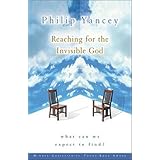
From Chapter 9 of Reaching for the Invisible God by Philip Yancey.

Product DetailsI have learned one absolute principle in calculating God's presence or absence, and that is that I cannot. God, invisible, sovereign, who according to the psalmist "does whatever pleases him," sets the terms of the relationship. As the theologian Karl Barth insisted so fiercely, God is free: free to reveal himself or conceal himself, to intervene or not intervene, to work within nature or outside it, to rule over the world or even to be despised and rejected by the world, to display himself or limit himself. Our own human freedom derives from a God who cherishes freedom.

I cannot control such a God. At best I can put myself in the proper frame to meet him. I can confess sin, remove hindrances, purify my life, wait expectantly, and - perhaps hardest of all - seek solitude and silence. I offer no guaranteed method to obtain God's presence, for God alone governs that. Solitude and silence merely supply the state most conducive to attending to the still, small voice of God. There is, however, a sure way to promote God's absence. C. S. Lewis sets it out clearly: "Avoid silence, avoid solitude, avoid any train of thought that leads off the beaten track. Concentrate on money, sex, status, health, and (above all) on your own grievances. Keep the radio on. Live in a crowd. Use plenty of sedation. If you must read books, select them carefully. But you'd be safer to stick to the papers. You'll find the advertisements helpful; especially those with a sexy or a snobbish appeal."

Lewis adds that he cannot give advice on pursuing God, having never had that experience. "It was the other way round; He was the hunter (or so it seemed to me) and I was the deer ... But it is significant that this long-evaded encounter happened at a time when I was making a serious effort to obey my conscience."

The Influence of Excitement


PermalinkThere are some wonderful instances of ordinary Christians, not least the young, who are concerned to preach the whole gospel unabashedly and do good first to the household of God and then, as much as is possible, outside as well. That has got biblical mandate behind it. . . .
My warning would be to those who are coming along and talking a lot about, “I want to be faithful to the gospel, but I also want to do social justice and good works.” My warning would be: it is not just what you do, it is what you are excited about.
If I have learned anything in 35 or 40 years of teaching, it is that students don’t learn everything I teach them. What they learn is what I am excited about, the kinds of things I emphasize again and again and again and again. That had better be the gospel. 
If the gospel—even when you are orthodox—becomes something which you primarily assume, but what you are excited about is what you are doing in some sort of social reconstruction, you will be teaching the people that you influence that the gospel really isn’t all that important. You won’t be saying that—you won’t even mean that—but that’s what you will be teaching. And then you are only half a generation away from losing the gospel.
Make sure that in your own practice and excitement, what you talk about, what you think about, what you pray over, what you exude confidence over, joy over, what you are enthusiastic about is Jesus, the gospel, the cross. And out of that framework, by all means, let the transformed life flow. (Boldfaced text is my emphasis).
– Don Carson, lecture, “Is the Culture Shaping Us or are We Shaping the Culture?” delivered at the CBMW Different By Design Conference (Feb. 2, 2009, Minneapolis, MN)..